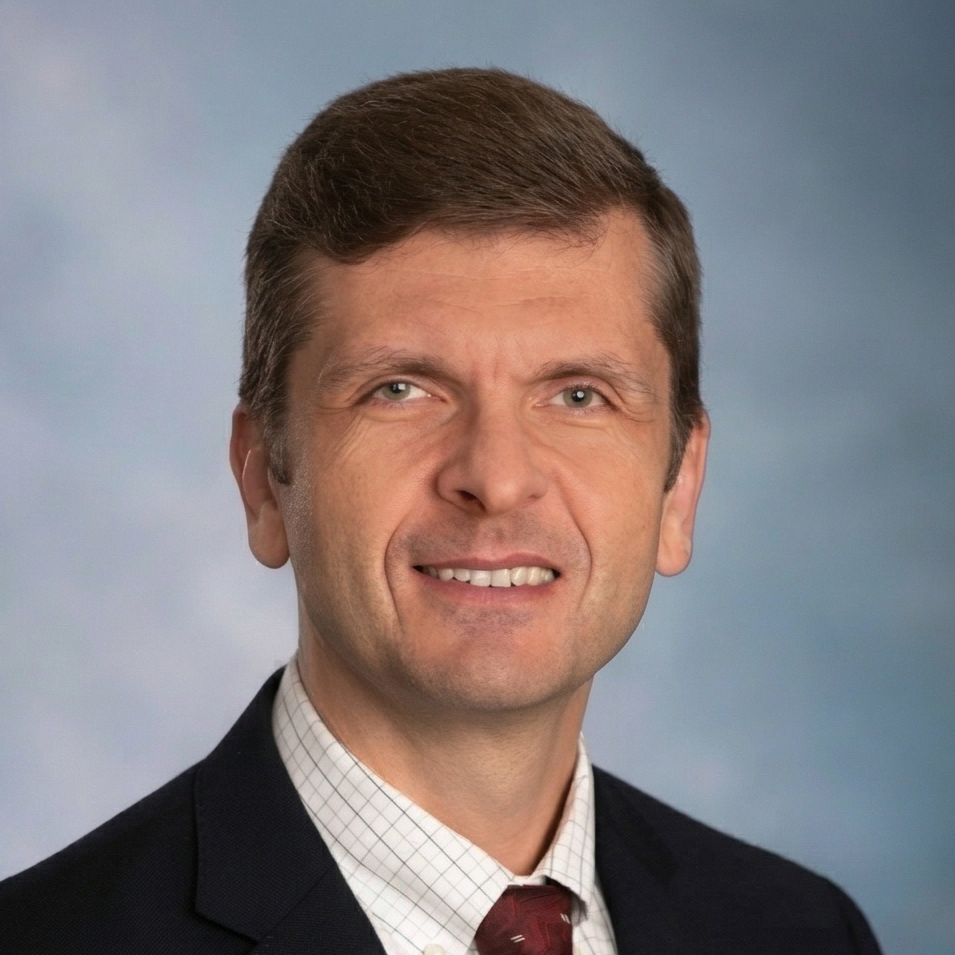
I lead an interdisciplinary AI research program at Georgia State University, at the intersection of machine learning and heliophysics — one of the most computationally challenging frontiers in scientific discovery. Over 20+ years at Montana State University and Georgia State University, I have secured and managed more than $18M in federal funding from NASA and NSF — spanning multi-institution collaborations, federal compliance mandates, and industry partnerships; graduated 12+ doctoral students; and built the Big Data & Machine Learning graduate concentration from the ground up. My work spans rare-event prediction, neural operator surrogate modeling, and open-source AI infrastructure that serves the global space weather community. I hold affiliate appointments in the Department of Physics & Astronomy and the Robinson College of Business at Georgia State University.
(NASA, NSF & Industry)
(journals, conferences, monograph)
(academic, research, or executive positions)
(MSU 2004–2013 · GSU 2013–present)
(Solar & Stellar Astronomy Big Data, 2026)
Academic Leadership
Graduate program directorship, faculty mentorship, cross-college curriculum governance, enrollment strategy, and 20+ years of academic service at research-intensive universities.
View leadership profile →Research & Innovation
AI-driven space weather forecasting, neural operator surrogate modeling, open-source scientific ML infrastructure, and $18M+ in federally funded research across NASA and NSF.
View research profile →My research develops AI and machine learning methods for space weather forecasting and scientific simulation — with a particular focus on the rare-event prediction problems that make this domain unusually demanding for machine learning. Solar flares, coronal mass ejections, and solar energetic particle events can severely disrupt satellites, power grids, communication infrastructure, and astronaut safety; reliable AI-based forecasting of these phenomena is both a scientific and societal imperative.
Beyond operational forecasting, my group advances neural operator surrogate modeling to accelerate physics-based MHD simulations, and produces open-source AI cyberinfrastructure — including the SWAN-SF benchmark dataset and MVTS-Data Toolkit — that now serves the global heliophysics research community. This work is supported by sustained federal funding from NASA and NSF across 20+ awards.
AI & Deep Learning for Space Weather
CNNs, Transformers, GNNs, and neural operators for solar flare, CME, and SEP prediction; XAI methods including Grad-CAM for operational forecasting; synthetic data generation for extreme class imbalance.
Neural Operator Surrogate Modeling
SFNO-based ML surrogates for MHD simulations; accelerating heliospheric and plasma physics simulation by orders of magnitude; transferable geometry frameworks across space and fusion domains.
Open Science & Community Infrastructure
SWAN-SF Dataset and MVTS-Data Toolkit; AI-ready benchmark data for the global space weather community; sustained open-source cyberinfrastructure development under NASA and NSF funding.
Graduate Program & Research Leadership
Founded and direct the BDML concentration at GSU; designed dual-degree BS/MS pathways; mentored 12+ PhD graduates now at universities, national labs, and major technology companies.