Bio
Short Bio
~200 words for broader use
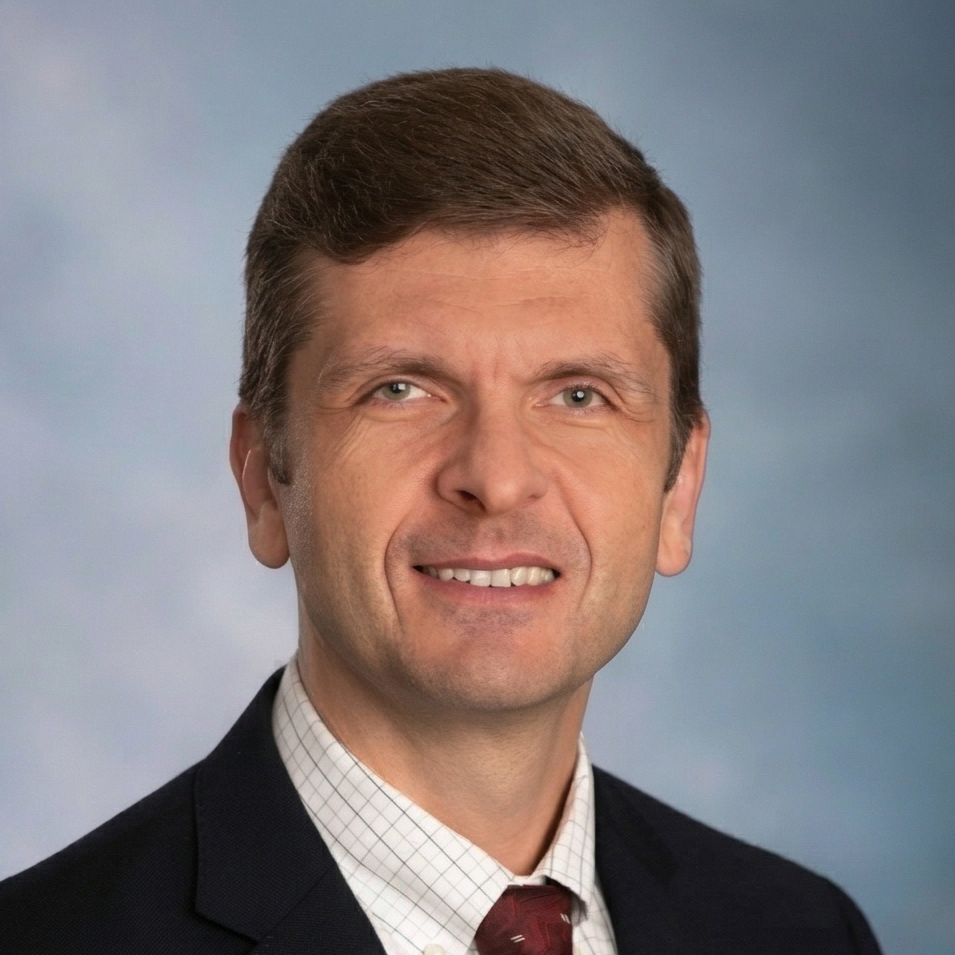
Rafal A. Angryk is a Distinguished University Professor and 2CI Professor of Computer Science at Georgia State University (GSU), where he am the founding director ofs the Data Mining Lab (DMLab) — an interdisciplinary AI research group with sustained federal funding from NASA, NSF, and industry. His research sits at the intersection of artificial intelligence and scientific discovery, with a particular focus on machine learning for space weather forecasting and rare-event prediction.
Over a 20+ year career spanning Montana State University and GSU, he has secured more than $18M in grants and contracts, graduated 10+ doctoral students now working across academia, industry, and research institutions, and built the Big Data & Machine Learning (BDML) concentration — one of the most deliberately interdisciplinary graduate concentrations at GSU. He is a member of the University System of Georgia’s Data Science Regents’ Advisory Committee and a participant in GSU’s inaugural Academic Leadership Institute Fellows program.
He grapples with big data so the rest of us don’t have to.
Full Academic Bio
~500 words, formal academic bio
Rafal A. Angryk is a Distinguished University Professor and 2CI Professor of Computer Science at Georgia State University (GSU), where he has been a faculty member since 2013. He holds affiliate appointments in the Department of Physics & Astronomy and the Robinson College of Business (Institute for Insight). Prior to joining GSU, he was a faculty member at Montana State University (2004–2013), where he began his long-standing collaboration with the heliophysics community and served as Director of the PhD Program in Computer Science (2006–2013).
Research
Dr. Angryk’s research lies at the frontier of artificial intelligence and machine learning, with a primary application domain in data-driven space weather forecasting. His group designs and deploys advanced AI models — spanning deep learning architectures, neural operators for scientific simulations, and large-scale spatiotemporal analysis — for predicting high-impact rare events including solar flares, coronal mass ejections (CMEs), and solar energetic particle (SEP) events. These phenomena can severely disrupt satellites, power grids, and communication infrastructure, making reliable AI-based forecasting a critical scientific and societal challenge.
Beyond space weather, his work advances the broader methodology of AI for science — developing open-source machine learning toolkits, AI-ready benchmark datasets, and surrogate modeling frameworks that accelerate scientific simulation across physics domains. His research is supported by sustained federal funding from NASA and NSF, as well as past industry partnerships, totaling over $18M in grants and contracts across 20+ awards on which he served as PI or Institutional-PI.
His primary research contributions span rare-event prediction using imbalanced and spatiotemporal datasets, open-source AI cyberinfrastructure (MVTS-Data Toolkit, SWAN-SF Dataset), neural operator surrogate modeling for heliospheric Magnetohydrodynamics (MHD) simulation, multivariate time series analysis, content-based image retrieval for large-scale solar archives, and high-dimensional data indexing. He is the author of 200+ peer-reviewed works spanning a scholarly monograph, journal articles, book chapters, and refereed conference and workshop papers.
Lab and Program Leadership
Dr. Angryk is the Founder and Director of the Data Mining Lab (DMLab) at GSU, an interdisciplinary research group spanning Computer Science, Physics & Astronomy, and Mathematics & Statistics, with active collaborations with NASA research centers, national laboratories, and international heliophysics consortia. He has graduated 10+ doctoral students, mentored 7 postdoctoral researchers, and currently supervises 5 active PhD students. DMLab alumni hold positions at institutions including Utah State University, University of Missouri–St. Louis, University of Massachusetts Lowell, University of Texas at El Paso, Georgia State University, and Stanford Health Care, as well as major technology companies including Meta and others in industry.
He is also the Founder and Director of the Big Data & Machine Learning (BDML) Concentration within GSU’s university-wide M.S. in Data Science and Analytics program, established in 2019 through sustained collaboration across the Departments of Computer Science and Mathematics & Statistics. The BDML concentration is STEM-designated and has experienced consistent year-over-year enrollment growth since its founding.
Service and Leadership
Dr. Angryk is a participant in GSU’s inaugural Academic Leadership Institute Fellows (ALIF) program. He serves on the University System of Georgia’s Data Science Regents’ Advisory Committee (nominated by GSU Provost Wendy F. Hensel, 2020–present) and previously served on the USG Data Science Working Group (2019–2020). He has served on the CAS Promotion & Tenure Committee, co-chaired the faculty search that resulted in the current Department Chair of Computer Science, and served on the GSU University Senate.
He is the founder and long-standing chair of the Solar & Stellar Astronomy Big Data (SABID) international workshop series (2014–present, now in its 8th edition), and has organized related workshops at IEEE BigData, ICDM, and the American Geophysical Union Annual Fall Meeting.
Education and Background
Dr. Angryk completed his doctoral training in the United States, earning both a Ph.D. and a second M.S. in Computer Science from Tulane University (2004), where he worked under Professor F.E. Petry (IEEE Life Fellow, IFSA Fellow, NRL Researcher) on fuzzy induction and data mining. His earlier graduate training was completed in Poland — an M.S. in Computer Science with highest honors from the Technical University of Szczecin, and an M.A. in Business Management from the University of Szczecin. His Ph.D. was formally recognized as equivalent to a Polish doctorate by the Polish Academy of Sciences. He joined the U.S. academic system in 2004 as a faculty member at Montana State University, and held a visiting faculty position at Al Akhawayn University in Morocco during that period. He is a native Polish speaker and maintains active international research collaborations.